


Bringing a new product to market is an exciting venture, but the supply chain is full of hidden traps. For many small businesses and startups, finding a reliable manufacturer is the hardest part. A sourcing company can bridge this gap, but their expertise comes with a price tag.
Understanding the cost of hiring a sourcing company is essential before you sign a contract. Some charge a simple commission, while others demand monthly retainers or hourly fees. If you choose the wrong model for your business size, you could burn through your margin before you even sell a single unit.
This guide breaks down the real sourcing company usa pricing models, what you get for your money, and how to spot hidden fees that could hurt your bottom line.
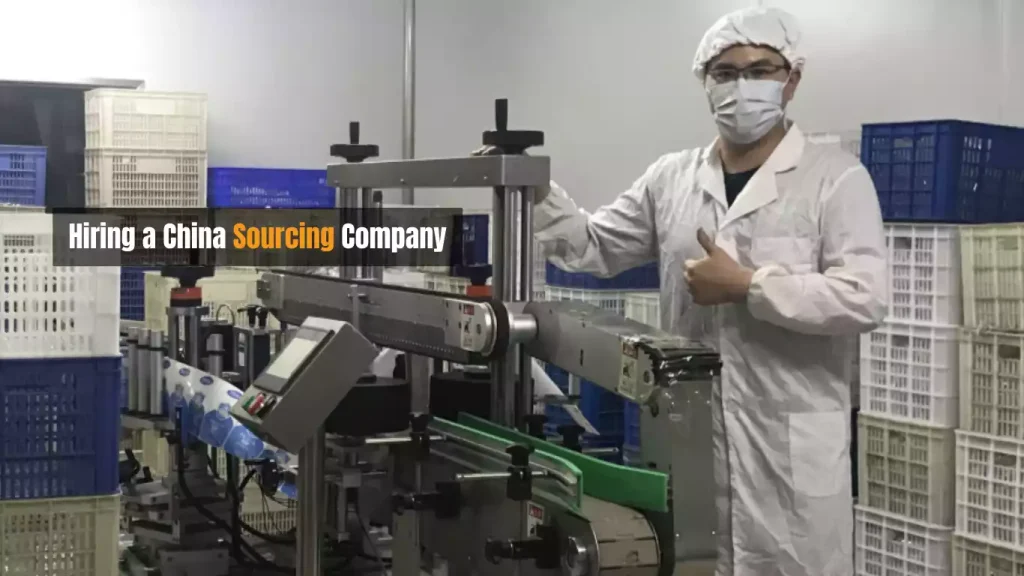
You might ask, “Can’t I just find a supplier on Alibaba myself?” You can, but you are paying for risk reduction. A professional sourcing company acts as your insurance policy against scams, poor quality, and shipping nightmares.
They have established networks of vetted factories. They know how to negotiate contracts that protect your interests. Most importantly, they handle the time-consuming back-and-forth communication, allowing you to focus on marketing and sales.
The fees you pay a sourcing company should be viewed as an investment in stability. While it increases your upfront costs, it often lowers your total “landed cost” by avoiding expensive mistakes like defective batches or customs seizures.
Sourcing companies in the USA typically use one of four pricing structures. Understanding these will help you compare quotes effectively.
This is the most common model for small to medium businesses. The sourcing company charges a percentage of your total order value.
Low upfront risk. You only pay when you place an order.
The agent makes more money if your product cost is higher, which can create a conflict of interest. They might not fight as hard for the lowest price.
This model is preferred by professional, full-service US agencies. You pay a fixed amount for their time and expertise, regardless of the order value.
Transparent costs. The agent is motivated to find the best supplier, not the most expensive one.
High upfront cost. You pay even if you decide not to proceed with manufacturing.
Some sourcing consultants work like lawyers or accountants, charging by the hour. This is common for specific tasks like contract review or troubleshooting a supply chain issue.
Flexible. Good for short-term consulting or solving a specific problem.
Costs can spiral quickly if the project becomes complex. It is hard to budget for the final total.
Many experienced sourcing company fees usa structures combine these methods. You might pay a small upfront flat fee to start the search, followed by a reduced commission (e.g., 3-5%) on the final order. This balances the risk for both parties.
It helps to know the market rates for specific tasks so you can spot an overpriced quote.
Service | Typical Cost Range | Notes |
Supplier Sourcing | $500 – $2,000 (Flat) | Includes finding and vetting 3-5 factories. |
Factory Audit | $300 – $800 per day | Physical inspection of the factory facilities. |
Quality Inspection | $200 – $400 per day | Pre-shipment inspection of your goods. |
Sample Management | $50 – $100 + Shipping | Consolidating samples from multiple factories. |
Full Project Management | 10% – 15% Commission | End-to-end service from sourcing to delivery. |

Not every project costs the same. Several variables will increase or decrease the fees you are quoted.
Sourcing a standard white T-shirt is easy. Sourcing a custom-designed electronic gadget with a proprietary circuit board is hard. Complex products require engineers and specialized knowledge, which drives up the cost of the sourcing agent.
This is the rule of economies of scale. If you are ordering 50,000 units, an agent might lower their commission to 3-5%. If you are ordering the Minimum Order Quantity (MOQ) of 500 units, they may demand 15% or a flat minimum fee to make it worth their time.
Are you just asking for a list of three phone numbers? Or do you need someone to negotiate the price, oversee the prototype, manage packaging design, and handle freight forwarding? The more “hands-off” you want to be, the more you will pay.
The number on the quote is rarely the final number on the invoice. Be aware of these hidden costs that can eat into your profit.
Some unethical agents charge you a low fee (or even work for “free”) but take a secret commission from the factory.
If your agent handles payments to the factory, check the exchange rate they are using. They might charge you in USD but pay the factory in RMB, keeping a 2-3% spread on the currency conversion.
Agents who manage shipping often add a markup to the freight bill. While a small handling fee is normal, some agents add 20-30% to the shipping cost. Always ask for the original freight invoice or get a comparison quote from a third-party freight forwarder.
The location of your partner significantly affects the pricing and the value you receive.
Complex products, high-value orders, and businesses that need legal security.
Language barriers and time zone differences. If they steal your money or IP, you have very little legal recourse.
To decide if hiring a sourcing company is worth it, run a simple ROI calculation.
Scenario: You plan to order $20,000 of inventory.
You spend 100 hours finding suppliers and managing logistics. You make a mistake on customs paperwork that costs $1,000 in fines. Total Cost: $20,000 (product) + $1,000 (fine) + 100 hours of your time.
They charge a 10% fee ($2,000). They negotiate a better price, saving you $1,000 on the product cost. Total Cost: $21,000.
In this scenario, you paid a net $1,000 extra to save 100 hours of your time and eliminate the stress of logistics. For most business owners, buying back 100 hours for $1,000 is a fantastic investment.
However, if your order is very small (under $2,000), a sourcing company’s minimum fees might consume your entire profit margin. In that case, DIY sourcing is usually the better option.
The cost of hiring a sourcing company varies based on your needs, but transparency is key. Whether you choose a commission model (5-15%) or a monthly retainer ($1k+), ensure everything is written in a clear contract.
A good sourcing partner pays for itself by negotiating better prices, preventing quality issues, and handling the complex logistics of global trade. Do not just look for the cheapest fee; look for the partner who offers the most security and transparency for your supply chain.
It depends. If you pay a flat upfront fee (retainer), it is usually non-refundable because you paid for their time. Commission-based agents typically only get paid if you place an order.
For large orders, a flat fee is often cheaper. For smaller orders, a percentage (commission) model is usually more cost-effective and lowers your upfront risk.
Many US sourcing companies require a minimum project value of $10,000 to $20,000. If your order is smaller, they may refer you to a freelancer or decline the project.
Yes, most full-service firms manage logistics. However, clarify if this is included in their fee or if they charge an extra management fee for freight forwarding.
Ask for transparency. A legitimate agent will let you pay the factory directly. If an agent insists you pay them, and they pay the factory, there is a higher risk of hidden markups.